
Real Money Casino Table Games in Australia: Rules
 Available in AU
Learn how familiar table games work and why offering them online for real money raises a separate legal question in Australia.
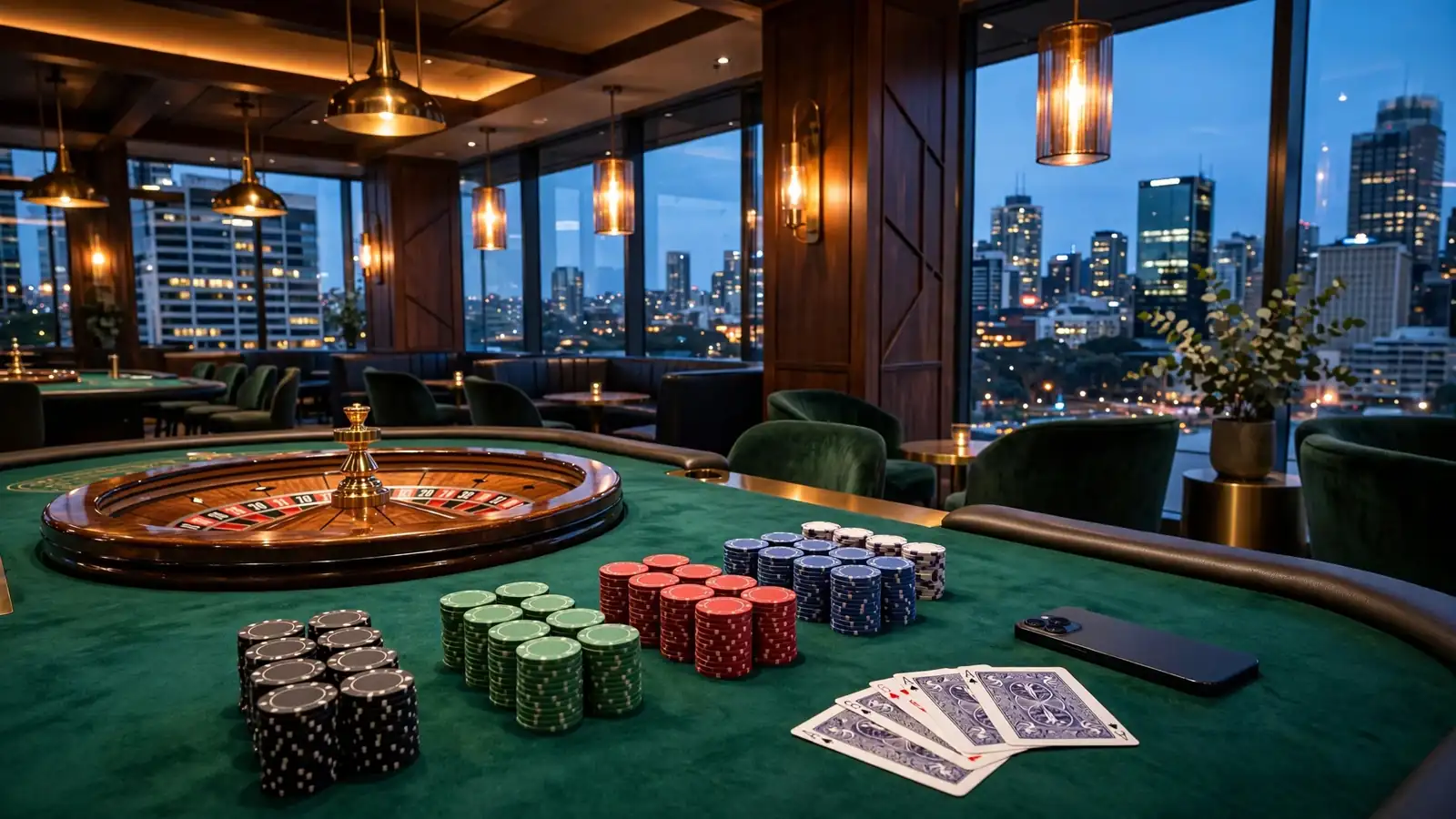
Table of Contents
- Before You Play Online, Know the Australian Rules
- Bitcoin at the Table: What This Search Can—and Can’t—Tell You
- Why Table-Game Odds Can’t Be Ranked Here
- What Happens When You Sit Down to Play
- Looking for a Casino Near You
- What Counts as a Casino Table Game?
- Table-Game Formats You May Come Across
- Card Tables: The Basic Aim of the Game
- Roulette Rules and the Zeroes to Notice
- Poker at the Table: The Aim, Not a Product List
Before You Play Online, Know the Australian Rules
The first thing to separate is the game from the service offering it. A blackjack hand or roulette spin follows its own rules, but making that game available online for real money to people in Australia raises a separate legal issue. Knowing how a table works does not tell you whether the online service may lawfully offer it here.
Australia’s Interactive Gambling Act 2001 is the central law in this area. Under Section 5, operators based in Australia are prohibited from offering real-money interactive casino games to residents. The prohibition covers online casino-style games, including table games, when provided to customers in Australia. It is directed at the operator and the service, rather than changing the rules of blackjack, roulette or another game.
That distinction matters. A screen may look like a familiar casino table, yet the legal question is not whether the digital version resembles the physical one. It is whether a real-money interactive gambling service is being provided to someone in Australia. The game’s appearance does not settle that question.
Choosing a real-money casino table games site in Australia means checking the practical details that matter before you play. Use this list to review the licensing and payment information provided for each operator.
License: Curacao eGaming OGL/2023/174/0082 (Dama N.V.) · Min. deposit: A$15 LevelUp Casino lists a Curacao eGaming licence held by Dama N.V. Its minimum deposit is A$15.
License: Curacao · Payout speed: crypto 30-60 minutes, fiat 1-5 days · Min. deposit: A$10 Wild Tokyo lists a Curacao licence and a minimum deposit of A$10. Its stated payout times are 30–60 minutes for crypto and 1–5 days for fiat.
License: Curacao OGL/2024/1335/0780 · Min. deposit: EUR 20 Vegaz Casino lists a Curacao licence, OGL/2024/1335/0780, and a minimum deposit of EUR 20.
License: Curacao eGaming (Dama N.V.) JeetCity Casino lists a Curacao eGaming licence held by Dama N.V.
License: Curacao Gaming Control Board OGL/2023/176/0095 (Hollycorn N.V.) LuckyVibe lists a Curacao Gaming Control Board licence, OGL/2023/176/0095, held by Hollycorn N.V.
License: Curacao Gaming Authority (Jumpman Gaming Ltd) DragonSlots Casino lists a Curacao Gaming Authority licence held by Jumpman Gaming Ltd.
Payout speed: crypto ~90 minutes, fiat 1-5 days · Min. deposit: A$30 Kingmaker lists payout times of around 90 minutes for crypto and 1–5 days for fiat. Its minimum deposit is A$30.
License: Curacao (operating since 2017) · Min. deposit: A$20 Uptown Pokies lists a Curacao licence and says it has operated since 2017. Its minimum deposit is A$20.
Payout speed: crypto under 1 hour, PayID 1-3 business days · Min. deposit: A$20 (A$30 to qualify for the bonus) Ricky Casino lists crypto payouts in under an hour and PayID payouts in 1–3 business days. The minimum deposit is A$20, or A$30 to qualify for the bonus.
License: Curacao eGaming OGL/2024/923/0383 (Antillephone N.V.) · Min. deposit: A$30 WinSpirit Casino lists a Curacao eGaming licence, OGL/2024/923/0383, held by Antillephone N.V. Its minimum deposit is A$30.
The Australian Communications and Media Authority (ACMA) is responsible for enforcing compliance, including blocking unlicensed domestic platforms. The framework is therefore not simply a matter of checking whether an operator displays a licence or whether its website opens. A platform being reachable, or describing itself as an online casino, should not be taken as proof that it is authorised to provide real-money casino games to Australians.
The legal restriction also does not mean that every online table game works in the same way. There are two broad ways the action may be presented. In a live-dealer game, a real dealer operates real casino equipment and the video is streamed to players. The screen shows a live table rather than merely animating a result. That describes the format; it does not change the legal status of a real-money service offered to people in Australia.
Other online table games use a Random Number Generator, or RNG, to determine an outcome. In a card game, the software determines which cards are dealt; in roulette, it determines where the ball lands. The result is generated by software rather than shown through a live dealer’s physical actions. Again, this is a description of how an online version may function, not a sign that the service is permitted under Australian law.
I find it useful to keep those two questions apart: what produces the result, and whether the service may offer real-money play here. A live video feed does not answer the second question, and neither does an RNG. Mechanics are not permission.
You may also see table-game pages described as free to play. That phrase refers to a claimed mode of play, not a general exception to the rules on real-money casino services. The important distinction in the law is whether a prohibited interactive gambling service is being provided for real money. A label on a page cannot, by itself, establish how a particular service operates or whether it complies with the law.
The same care applies to promotions. A bonus offer does not alter the underlying rules governing the service. Terms attached to an offer may set conditions on how promotional funds can be used, but those conditions are separate from the question of whether real-money casino games may be provided to people in Australia. A promotion is not a legal safeguard.
For readers, the practical point is not to confuse a familiar game format with a lawful online offering. Table-game rules explain what a player does during a hand or spin; Australian gambling law governs whether an operator may supply the real-money service. Those are different questions, and answering one does not answer the other.
Bitcoin at the Table: What This Search Can—and Can’t—Tell You
Bitcoin in a table-game description tells you something about the payment method being discussed; it does not, by itself, establish what games are offered, how they work, or whether a particular service is lawful. I’d keep those questions separate. A digital currency label is not a game format, a quality check or a recommendation.
Australian Law
Under the Interactive Gambling Act 2001, operators are prohibited from offering real-money interactive casino games to residents in Australia.
There is also an important Australian boundary. Under the Interactive Gambling Act 2001, operators cannot provide real-money online casino games to people located in Australia. That includes table games, whether a page mentions Bitcoin or another payment method. A payment label does not change the rules.
For the game experience itself, the useful distinction is between a live-dealer table and an online game determined by a random number generator (RNG). Those describe how play is presented and how outcomes are produced. They are not a Bitcoin-versus-standard-casino distinction: the currency named on a page does not tell you which format you are looking at.
Live dealer or RNG?
In a live-dealer game, a real dealer uses casino equipment, and a video stream carries the action to players. You see the dealer and the game in progress on screen. The defining feature is the streamed, real-time table action—not the payment method mentioned elsewhere on the site.
An RNG-based online table game works differently. Software uses a random number generator to determine outcomes. For example, it can determine which cards are dealt or where the roulette ball lands. There is no streamed dealer performing that round; the result is generated by the game’s system.
That is the central difference. One presents a live dealer and physical equipment through video; the other produces outcomes through an RNG. Neither description tells you that a game is better, safer, or more suitable for you. Those would be separate claims, not something you can infer from the format alone.

What Bitcoin cannot tell you
A reference to Bitcoin does not confirm that a table game is available, that it uses a live dealer, or that its outcomes come from an RNG. Nor does it establish the terms attached to a service or make real-money online casino play lawful in Australia. Treat the currency and the game mechanics as separate details.
The same goes for broad claims about a “top” table game or a “best” Bitcoin table. A label like that is not evidence about how a game operates. If the page does not explain whether the game is streamed or RNG-based, the Bitcoin wording does not fill in the gap. And if it does explain the format, that still does not turn the description into an endorsement.
I’d be cautious about treating a “casino table games open” message as proof of anything beyond the wording on that page. Availability language does not establish that a service can legally offer real-money casino games to someone in Australia. The law is the part that matters here. No clever payment label changes it.
So, when you come across Bitcoin alongside table games, read it narrowly: it refers to a payment-related topic, not a special kind of blackjack, roulette or other table play. To understand the mechanics, look for whether the description says a real dealer is streamed or an RNG determines the outcome. Keep that distinction clear—and do not mistake a format description for permission to play.
A real dealer operates actual casino equipment and the action is streamed to players in real-time.
Software uses a random number generator to determine outcomes, such as card deals or roulette results.
Why Table-Game Odds Can’t Be Ranked Here
“Best odds” sounds like a simple label to put beside a table game. It is not. A ranking needs comparable information about the rules, the available bets and the way each game is run. Without that, saying one game gives you better odds than another would be guesswork dressed up as advice.
A house edge chart can look tidy, but a chart is only useful when its figures have a clear basis. The game name alone does not tell you which rules are in use or what wager the figure describes. Even within a familiar category, different bets can have different terms. A single number beside a game can therefore hide the detail that matters.
That is why searches for casino table games with the best odds, or for the worst odds, cannot be answered responsibly with a universal league table. The same caution applies to a claim that a particular game is the best table game at a casino. “Best” could mean a particular chance of winning a hand, a lower expected cost over repeated play, or simply a format you enjoy. Those are not interchangeable measures.
I would be wary of a neat ranking that skips its working. If it does not say what rules and wager it assumes, you cannot tell whether the comparison applies to the table in front of you. Dry, but important.
There is a further distinction between odds and a promise of results. A game’s mathematical terms describe probabilities over play; they do not tell you what will happen in a particular hand, round or session. A favourable-sounding figure cannot make a short run predictable, and a losing run does not prove that a table has changed its rules.
For online play, the underlying method matters too. A live-dealer game uses a real dealer and casino equipment, with the action streamed to players. An online table game may instead use a random number generator to determine the cards or roulette outcome. Those are different ways of presenting and resolving play, but neither description by itself establishes which option has the best odds.

A fair comparison would need the relevant rules and the exact wager being assessed, rather than a broad label such as blackjack, roulette or poker. It would also need to distinguish the game’s mathematical expectation from the chance of winning a single bet. Without that context, a table headed “best casino odds” may be more confident than its evidence allows.
So if you are weighing up table-game odds, look for an explanation of what is being measured and which rules the calculation assumes. Treat an unexplained ranking as a claim, not a useful comparison. No magic number.
What Happens When You Sit Down to Play
The first thing to notice is that table games do not all ask you to do the same thing. In one, you compare a hand with the dealer’s; in another, you choose which outcome to back; in poker, the aim is to build the strongest hand. Dice add a different sort of decision: the roll produces an outcome, and wagers are placed on it. The details vary, but the basic shape is easy to follow once you know what each game is asking you to watch.
In blackjack, you are competing against the dealer. The aim is to have a hand value closer to 21 than the dealer’s hand. That gives the game a clear point of comparison: your hand against theirs. It is not a contest to make the highest possible total without regard to the other player. The target matters, and so does the dealer’s result. Beyond that broad aim, rules and available decisions can depend on the particular game, so the central description should not be mistaken for a full set of table instructions.
In baccarat, the focus is on which of three outcomes occurs: your hand, the Banker’s hand, or a tie. Those are the wagers available in the basic description. The player is not being asked to beat the dealer in the blackjack sense; the decision is which result to back. That makes the first step less about comparing your own hand with someone else’s and more about understanding the options printed for the table. Different game versions may set out their rules in different ways, so read the specific table information rather than assuming every detail transfers.

Poker gives players a different objective again. The contest is to build the best possible poker hand. Players are battling for the strongest hand, rather than simply trying to get closer to a target number or predict which of a few outcomes will happen. That is the useful starting point for a newcomer: the hand itself is the focus. The exact rules depend on the poker game being played, and the general aim does not tell you which cards are dealt or what actions are permitted.
With dice, players roll a pair and bet on the outcome. The roll is the event to follow; the wager concerns what happens when the dice are thrown. That is enough to distinguish the basic experience from hand-based games, without pretending that every dice table uses the same betting options or procedures.
If you are trying to learn how these games work, begin by identifying the objective and the thing your wager relates to: a hand, one of several named outcomes, or a dice result. Then read the rules for that specific game before making any decision. Familiar labels can hide differences in procedures, and a short description is not a substitute for the table’s full rules. A useful orientation, not a rulebook.
Looking for a Casino Near You
When you want a casino close by, the first thing to pin down is what “near” means for your plans. A result across town may be practical if you are already travelling that way; one in another state is not a local option just because it appears in the same list. Distance on a screen is only a starting point.
The wording can also blur two different things: a physical casino and an online table game. A nearby venue is a place you would travel to; an online game is played through a device and is not made local by using it at home. I’d keep those separate before looking at anything else. They are different kinds of activity, with different practical and legal considerations.
If you are checking a particular area, use its actual suburb, town or region rather than relying on a vague “near me” result. Your location settings can affect what appears, and a broad result may refer to a different place with the same name. Searches for table games in Miami or Ohio, for instance, point away from an Australian local search; they do not tell you what is available where you are.

A result that mentions a casino does not, by itself, settle whether it has the table games you have in mind. Nor does a general reference to gaming tell you what is operating at a specific venue now. Before making a trip, look for current details from the venue itself, including its location, opening information and any description of its facilities. If those details are unclear, it is better not to assume.
There is another distinction worth keeping in view in Australia: a physical casino and an online casino are not interchangeable options. Australian law prohibits operators from providing real-money online casino games to people in the country. That legal position is separate from the question of whether a physical venue is nearby, and a map result does not answer it.
I would also be wary of treating “new casino table games” as a promise that a local venue has recently added something. “New” could mean a newly opened venue, a recent change to a venue’s offering, or simply a newly published page. Check what the wording actually refers to rather than letting the label do the work.
For a local visit, the useful questions are plain: Where is the venue? Is the information current? Does it describe the kind of table-game setting you mean? Those checks make the difference between a genuinely nearby place and a result that only looks relevant. No guesswork needed.
What Counts as a Casino Table Game?
A casino table game is a game organised around a shared play area where a player makes a wager on a card, dice or roulette outcome. The category is about how the game is played, not a promise that every casino offers every game. Nor does the label, by itself, tell you whether a game is played in person or through a screen.
The examples make the idea clearer. In blackjack, you compete against the dealer, aiming to have a hand value closer to 21. That gives the game a defined opponent and a clear objective. The detailed card rules are their own subject; for now, blackjack shows why card games are one familiar part of the table-game category.
Table Game Examples
Casino table games are organised around a shared area where wagers are made on cards, dice, or roulette outcomes.
Dice games put the roll at the centre. Players roll a pair of dice and bet on the outcome. The important point for this broad definition is the link between the wager and what the dice produce. It is still a table game even though cards are nowhere in sight. A simple distinction, but a useful one.
Roulette is another recognisable example. Players wager on where a ball will land on a numbered wheel. Online versions use a random number generator to determine the result; the physical wheel is not necessarily part of the experience. Roulette has several versions, with European and French layouts using numbers from 1 to 36 alongside a green zero, while the American layout also has a green double zero. Those details help identify roulette as a table game, though the game’s rules deserve a closer look separately.
So when you are trying to work out what people mean by casino table games, think of the underlying pattern: a defined game, a wager, and an outcome determined by cards, dice or a roulette wheel. The details vary. Blackjack centres on a hand against the dealer; dice play turns on a roll; roulette turns on the ball’s position. Not the same game, just the same broad family.
The word “table” can be misleading if you take it too literally. It does not mean that every version requires players gathered around a physical table. Online table games can use software to determine cards or a roulette result, while live-dealer games show a real dealer and equipment through a video stream. Those are different ways of presenting play, not new categories of outcome.
That distinction is handy when you see a game described as a table game: look for the kind of play it involves, rather than assuming a particular setting or presentation. Cards, dice and roulette are the core examples here. The label is broad; the rules are specific.
Table-Game Formats You May Come Across
A useful way to sort table games is by the kind of play at the table: card games, dice games and roulette. That gives you a practical map without pretending every casino offers the same selection. Within those broad formats, the aim and the decisions you make can be quite different.
Card tables include games where you compare a hand with a dealer, place a wager on one of several outcomes, or try to make the strongest hand. In blackjack, you are competing against the dealer, aiming for a hand value closer to 21. In baccarat, the available bets are on your hand, the Banker’s hand or a tie. Poker centres on building the best possible hand against other players. Those are related by the cards, not by identical rules.
Dice play has a different feel: players roll a pair of dice and bet on the outcome. The basic equipment is simple, but the wager is tied to what the roll produces rather than to a hand of cards. Roulette is another recognisable format, built around a wheel and a ball. Its layouts vary, so the details on a roulette table are worth treating separately from this broad outline.
Online Formats
In an RNG-based version, software determines the cards dealt or where the roulette ball lands. A live-dealer game instead uses a real dealer and casino equipment, with the table streamed to players.
Online table play can also differ in how the game is presented. In an RNG-based version, software determines the cards dealt or where the roulette ball lands. A live-dealer game instead uses a real dealer and casino equipment, with the table streamed to players. Both are online formats, but one presents a software-generated game while the other shows a live table.
That distinction is about presentation, not a promise that a particular format is available wherever you play. The word “live” describes the streamed dealer and equipment; it does not turn a card, dice or roulette game into a different category. Likewise, knowing the broad format tells you what kind of play to expect, but not every rule attached to a specific table.
When you are trying to make sense of a table-games list, look first for the basic format and then the game’s own aim. Card, dice and wheel play are useful starting points; live dealer and RNG describe how an online version runs. A tidy map, not a ranking.
Card Tables: The Basic Aim of the Game
Card tables can look similar from a distance, but the aim changes from game to game. In blackjack, you play against the dealer. The aim is to finish with a hand value closer to 21 than the dealer’s hand. That is the basic contest; it is not a matter of trying to build the strongest hand in the poker sense.

Baccarat has a different focus: the wager is placed on an outcome. The available choices are a bet on the player’s hand, the Banker’s hand, or a tie. The names can make the first two options sound like choices about who you personally support, but they identify the outcomes you are backing. Keep the options straight before you place a wager.
Poker is built around forming the best possible poker hand. That gives the game a different emphasis from blackjack’s comparison with the dealer or baccarat’s outcome-based wagers. The goal is clear at a high level, though it does not tell you the specific rules of every poker format. Those details depend on the version being played.
These differences are useful when you are trying to make sense of casino card table games. A game’s name alone does not tell you what you will be aiming for: blackjack is about your hand’s value against the dealer, baccarat offers wagers on either hand or a tie, and poker centres on making the best hand. Simple distinctions, but easy to blur when you are looking at several table-game descriptions at once.
If you are reading about baccarat casino table games, focus first on the three stated wager options rather than assuming it works like blackjack or poker. The choices describe what you are betting on; they do not make the games interchangeable. Likewise, calling something a table card game does not establish its exact rules. The useful starting point is the objective that is actually specified.
Summary of Objectives
- Blackjack: Beat the dealer with a hand closer to 21.
- Baccarat: Back the player, banker, or a tie.
- Poker: Build the strongest possible hand.
That is enough to orient yourself without turning a short overview into a rulebook. Blackjack has a target value and an opponent in the dealer. Baccarat presents three wager outcomes. Poker’s stated aim is to build the strongest possible hand. Different contests, different starting points.
Roulette Rules and the Zeroes to Notice
When you look at roulette, start with the wheel’s layout. The main versions are European, French and American roulette. Their names may sound like small regional differences, but the detail worth noticing first is the green zero pocket.
European and French roulette each have 36 numbered pockets and a green 0. American roulette has a green 0 as well, plus a green 00. That extra pocket is the clearest layout difference between the versions described here.
The green pockets are not numbered like the others, so they stand apart visually. When you sit at a roulette table, check the wheel and the matching layout before play begins; the version’s name tells you what arrangement to expect. It is an easy detail to miss if you are focused on the betting area rather than the wheel.
I find it useful to keep the comparison plain: European and French share the stated number layout, while American roulette includes the additional 00. That tells you how the wheels differ. It does not, on its own, settle questions about which version is preferable, and a layout should not be treated as a promise about results.
Roulette tables can present these versions in online settings, but the format does not change the basic point to check: which wheel is being used and whether it has a single green zero or both a 0 and 00. If a table’s label and display seem unclear, pause rather than guessing. A quick check beats discovering the difference mid-game.

These are rules details, not a recommendation to play. In Australia, real-money online casino games, including roulette, are prohibited services when offered to people in the country. Knowing how the layouts differ is simply a way to understand what the terms mean.
So, remember the zeroes: European and French have a green 0; American has a green 0 and 00. Small detail, plainly visible.
Poker at the Table: The Aim, Not a Product List
Poker at a casino table centres on the hand: players compete to build the best one they can. That is the basic idea behind casino poker table games, even though the details of play can vary from one format to another.
It is easy to focus on names when comparing poker tables, but the name alone does not explain what a player is trying to do. Start with the objective instead. You are looking to make a hand strong enough to prevail against the other players’ hands. The contest is about the cards you hold and how your hand compares with theirs.
That gives you a simple way to understand poker without treating every table as identical. The central aim is to form the best possible poker hand; the particular rules around a table determine how a game reaches that point. So when you encounter a poker table, pay attention to the game’s own explanation of how hands are formed and compared before joining in. Small rule differences matter.
Poker is often discussed alongside other casino table games, but its defining feature is this contest over hand strength. It is not a bet on where a roulette ball lands or on the result of a dice roll. The focus stays on the poker hand.
For anyone looking into poker tables at a casino, that is the clearest starting point: understand what counts as a strong hand in the game being played, then follow how players compete to make the best one. No grand theory needed. Just the aim.
Can you play table games online for real money?
Yes, offshore platforms may accept Australian players, but Australian-based operators are prohibited from offering real-money online casino games to residents. A live-dealer or RNG format does not change that legal distinction.
Do casino bonuses actually benefit table game players?
They can, but table games often contribute less toward wagering requirements than slots: blackjack and roulette may count for only 10–20%, or be excluded. Check the bonus terms for game contributions, wagering requirements and maximum bets.
How long do withdrawals typically take from offshore casinos to Australian bank accounts?
PayID withdrawals average 1–4 hours, while direct bank transfers can take 3–7 business days. The time depends on the payment method used.
Published by the Caspero Casino team.