Pokies Parlour Casinos in Australia: What to Know
 Available in AU
The phrase is informal, so distinguish a physical gaming venue from an online service and check what a page actually verifies.
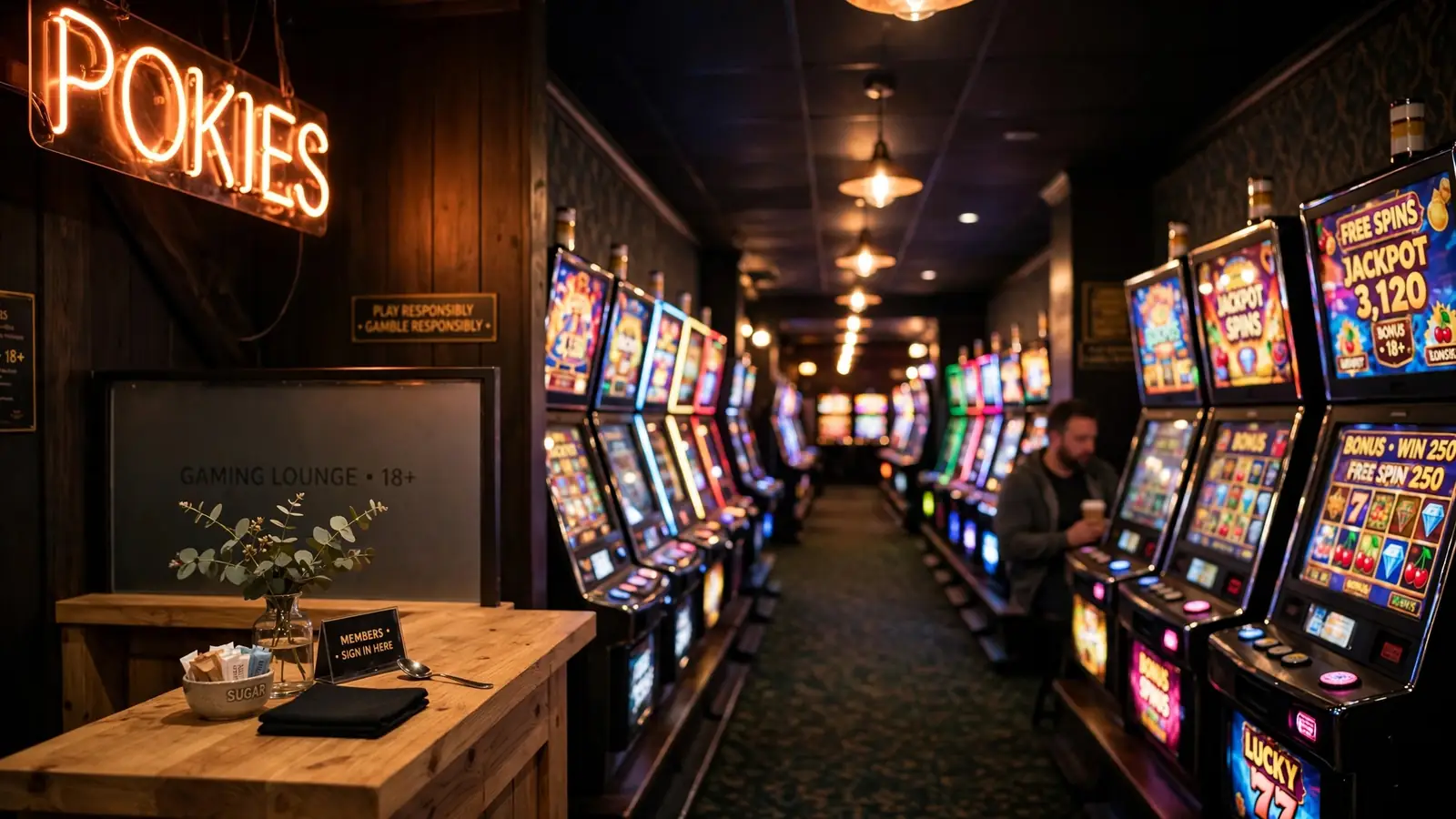
Table of Contents
- What “Pokies Parlour” Means in Australia
- Sign-Up and No-Deposit Bonus Searches: Check the Site, Not the Promise
- Online Play in Australia: What the Rules and Website Blocks Mean
- Free Chips and Spins: Read the Offer Carefully
- How to Read a Pokies Parlour Review
- Australian Casino Locations and Getting Through the Door
- A “Pokies Parlour Bonus” Is Not the Same as a Venue Detail
- VIP Parlour Access: What You Can Verify
- Parlour Pokies and the Scale of Casino Gaming Machines
- Real-Money Searches: Don’t Mistake Access for Approval
What “Pokies Parlour” Means in Australia
In Australia, “pokies” is a familiar name for gaming machines. A “pokies parlour” can therefore suggest a physical place where those machines are available, or a casino described in informal language. It is not, by itself, the name of a recognised national category of venue. The wording can be loose: one person may mean a casino gaming floor, while another may use it for a venue with gaming machines more generally.
That distinction matters when you come across the phrase online. A page using “pokies parlour” might be talking about a place you can visit, or it might be presenting an online gambling service in casino-style terms. The wording alone does not tell you which. And it does not establish that a particular website is an Australian casino. A physical venue and an internet service are different things, even when the language around them sounds much the same.
The basic national picture is not especially complicated, though the details are local. Australian casinos are regulated by the state or territory where each property operates, and each casino holds a licence issued by that jurisdiction. So there is no single national casino licence that turns every venue into one uniform operation. Local rules and oversight sit behind the familiar label.
If you’re looking for an online pokies option in Australia, this list gives you a quick reference to the details available for each operator. Use the stated licensing, deposit and payout information to help decide what to check before you play.
License: Curacao eGaming OGL/2023/174/0082 (Dama N.V.) · Min. deposit: A$15 LevelUp Casino lists a Curaçao eGaming licence, OGL/2023/174/0082, held by Dama N.V. Its minimum deposit is A$15.
License: Curacao · Payout speed: crypto 30-60 minutes, fiat 1-5 days · Min. deposit: A$10 Wild Tokyo lists a Curaçao licence and a minimum deposit of A$10. Its stated payout times are 30–60 minutes for crypto and 1–5 days for fiat.
License: Curacao OGL/2024/1335/0780 · Min. deposit: EUR 20 Vegaz Casino lists a Curaçao licence, OGL/2024/1335/0780. Its minimum deposit is EUR 20.
License: Curacao eGaming (Dama N.V.) JeetCity Casino lists a Curaçao eGaming licence held by Dama N.V. That licensing detail is the available point of reference for you.
License: Curacao Gaming Control Board OGL/2023/176/0095 (Hollycorn N.V.) LuckyVibe lists a Curaçao Gaming Control Board licence, OGL/2023/176/0095, held by Hollycorn N.V. This licensing information is the available detail for you to consider.
License: Curacao Gaming Authority (Jumpman Gaming Ltd) DragonSlots Casino lists a Curaçao Gaming Authority licence held by Jumpman Gaming Ltd. Its stated licence is the available point of reference for you.
Payout speed: crypto ~90 minutes, fiat 1-5 days · Min. deposit: A$30 Kingmaker lists crypto payouts at about 90 minutes and fiat payouts at 1–5 days. Its minimum deposit is A$30.
License: Curacao (operating since 2017) · Min. deposit: A$20 Uptown Pokies lists a Curaçao licence and says it has operated since 2017. Its minimum deposit is A$20.
Payout speed: crypto under 1 hour, PayID 1-3 business days · Min. deposit: A$20 (A$30 to qualify for the bonus) Ricky Casino lists crypto payouts in under an hour and PayID payouts in 1–3 business days. The minimum deposit is A$20, or A$30 to qualify for the bonus.
License: Curacao eGaming OGL/2024/923/0383 (Antillephone N.V.) · Min. deposit: A$30 WinSpirit Casino lists a Curaçao eGaming licence, OGL/2024/923/0383, held by Antillephone N.V. Its minimum deposit is A$30.
You may see a specialist review describe Australia as having more than 20 full-scale casinos across all eight states. Treat that as a count reported by that kind of review, not as a permanent definition of the market or a live official register. Properties and classifications can change, and “full-scale casino” is not interchangeable with every place that happens to have gaming machines. The count gives a broad sense of the country’s casino footprint; it does not settle what a particular parlour label means.
That is why I would read the words before reading too much into them. “Pokie parlour” could be an informal description of a physical gaming area, part of a broader casino, or simply wording chosen for a website. “Casino” may sound more specific, but it still needs context: is the page describing a bricks-and-mortar property, or an online service? A familiar Australian expression does not answer that question for you.
The same goes for “parlour casino”. It may be a phrase used to make a venue sound intimate or focused on gaming machines, but it does not tell you the venue’s legal category, its operator, or what facilities it actually has. Those are separate details. A phrase can be useful shorthand without being a reliable description of the thing behind it.
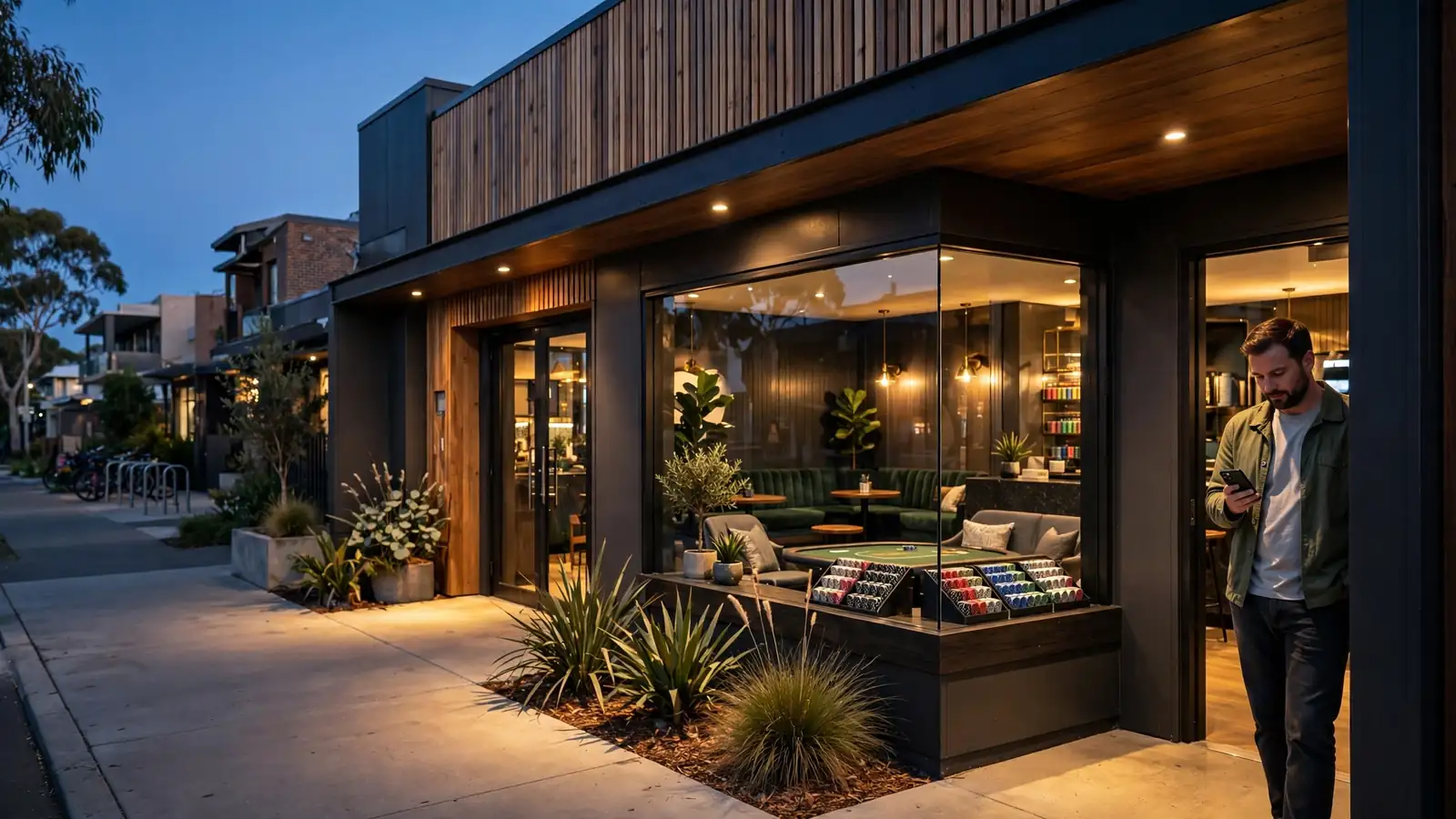
For a physical casino, the practical meaning is straightforward: it is a venue operating under the local jurisdiction’s casino licence, with entry governed by the venue and applicable rules. The minimum age for casino entry is 18 across Australia. That nationwide baseline is useful, but it does not turn every place called a parlour into a casino. Nor does it mean that the same label is used consistently from one state or territory to another.
I find it helps to keep three ideas apart: the word “pokies”, which points to gaming machines; “parlour”, which is an informal description rather than a nationwide licence type; and “casino”, which refers to a property operating under its local jurisdiction’s licence. The terms can overlap in casual conversation, but they do not prove the same thing.
If a page presents itself as a pokies parlour casino in Australia, the phrase may be aimed at people thinking of a physical casino or its machines. It may also be part of an online site’s branding. Don’t let the local-sounding wording do the work of evidence. A name can suggest a venue; it cannot establish one. That is the small but important distinction.
Sign-Up and No-Deposit Bonus Searches: Check the Site, Not the Promise
A sign-up bonus can sound like a simple welcome: create an account, receive a credit, start playing. “No deposit” makes the pitch sound even easier because it suggests that no payment is needed first. But those words describe a promotion, not the status of the service behind it. A bonus banner cannot establish that an online casino is authorised to serve people in Australia.
Legal Restriction
Under the Interactive Gambling Act 2001, operators cannot provide real-money online casino games to people physically located in Australia.
That distinction matters here. Under the Interactive Gambling Act 2001, operators cannot provide real-money online casino games to people physically located in Australia. Casino-style games such as slots, poker and table games fall within the prohibited services. So if a page presents a welcome offer for online casino play as though it were an ordinary Australian product, the offer itself does not make that service lawful.
I would start by asking what the page is actually describing. Is it a promotion for an online account, or information about a physical casino venue? The phrase “pokies parlour” can point people towards either kind of result, but a familiar local-sounding label does not settle the question. Nor does a polished page, an Australian-themed design or a claim that an offer is “for Australian players”. Those are statements made by the site, not proof of its legal position.
What the bonus wording does—and does not—tell you
A sign-up offer usually centres on an action: register, verify details, make a deposit, or accept terms. A no-deposit claim suggests that the initial offer does not require a deposit. In either case, the wording tells you what the advertiser wants you to notice. It does not tell you whether the operator may legally provide online casino games to people in Australia.
That is the point to keep in view when you encounter a “pokies parlour no-deposit bonus” or a casino welcome offer dressed in Australian language. The phrase may be prominent, while the identity and nature of the service are less obvious. Read the page as a claim about a promotion, not as an official status statement. A bonus is not a licence, and promotional terms cannot turn a prohibited service into a permitted one.
This also applies when the page uses the word “parlour” as if it referred to a local gaming venue. A physical venue and an online account are not interchangeable. If the offer requires you to register on a website and play casino-style games for money, it is describing online gambling, whatever name the page gives it. The label is not the substance.
A blocked page is not a verdict in either direction
Regulatory action can also make the picture less tidy. The Australian Communications and Media Authority (ACMA) has taken website-blocking action against illegal gambling services, including alternate domains associated with Fair Go. Regulatory reporting also describes how blocking can affect which addresses resolve through Australian internet providers, while other addresses may appear over time.
That context is useful, but it does not make a promotion more trustworthy or establish that a particular address is authorised. A site failing to load is not proof that its offer was genuine, and finding another address is not proof that the service has become lawful. A domain can change; the legal character of the underlying service does not change simply because its web address does.
Regulatory Action
The Australian Communications and Media Authority (ACMA) can block access to illegal gambling services via Australian internet service providers.
There is no need to treat a bonus as evidence of safety, approval or Australian licensing. Keep the two questions separate: what is the page promising, and what kind of service is it offering? If it is an online casino promotion aimed at people in Australia, the promise does not remove the legal restriction on operators providing that service.
The no-deposit wording can make an offer feel low-risk because it appears to ask little of you at the outset. That impression is not a reliable guide to the service’s status or to what its terms require. Promotional language is written to attract attention. It is not a regulatory finding.
So when a welcome offer borrows the language of a pokies parlour, look past the headline. Identify whether it concerns a physical venue or an online gambling account, and do not read the bonus claim as evidence that the online service is approved for Australian players. The promise is just the promise.
Online Play in Australia: What the Rules and Website Blocks Mean
A page can load on your phone, display games or accept account traffic without being an Australian-licensed online casino. Those signs tell you that a website is reachable; they do not change what Australian law permits an operator to provide.
The Interactive Gambling Act 2001 prohibits operators from supplying real-money online casino games to people in Australia. That covers casino-style services such as slots, poker and table games. The legal restriction is on the service provider, not a finding that a site is lawful simply because it accepts an Australian visitor or lets them open an account.

That distinction matters when a site presents itself as a local pokies parlour online. “Australian” wording, familiar-looking branding and a working sign-in page are not evidence of local approval. Nor does the appearance of a new web address establish that an operator has changed its status. A domain is an address, not a licence.
The Australian Communications and Media Authority, or ACMA, is the federal regulator responsible for enforcing the Act and overseeing compliance with federal interactive gambling rules. When it identifies prohibited gambling services or advertising aimed at people in Australia, it can ask Australian internet service providers to block access to the relevant websites. That is one part of its enforcement work; it does not turn a blocked or reachable address into a measure of whether the underlying service is permitted.
ACMA’s blocking record gives some sense of the scale of that work. Following enforcement action, it has blocked more than 1,455 illegal gambling and affiliate websites since November 2019. Some of the actions have involved alternate domains associated with Fair Go-related services. A block can affect whether a particular address resolves through an Australian provider, while addresses associated with a service can change over time. The address may move. The legal position does not move with it.
There is also a reported tally of illegal services that have left the Australian market since ACMA began enforcing the rules in 2017. Published figures disagree: one account puts the number above 210, while another says more than 190. Either way, they describe enforcement outcomes, not a list of services a reader can treat as approved.
Minimum Entry Age 18 across Australia
National Casino Count More than 20 full-scale casinos
Licensed Casino Machines 3,308 machines
A free-play label does not settle the legal question either. It may describe a promotional feature or a mode on a website, but it does not by itself establish who operates the service, what activity is being offered, or whether that service complies with Australian law. The wording on a page is not a regulatory decision.
This is why “it opened for me” is a poor test of status. Internet access can vary after blocking action, and an alternate domain can appear without any change to the rules governing the operator. ACMA’s role is to enforce those rules and take action where services fall within the prohibited categories. A functioning page is only a functioning page.
Free Chips and Spins: Read the Offer Carefully
“Free spins” and “free chips” sound like small, low-stakes extras. In practice, those phrases are promotional hooks: they can make an online gambling service seem like a casual offer rather than a service you should assess carefully. The word “free” does not tell you who is making the offer, what activity it leads to, or whether the service can lawfully be provided to people in Australia.
I treat the wording as a claim, not a credential. A banner, pop-up or social post may present free play as a welcome gift, but that does not establish that the offer is lawful here. Nor does it turn an online casino into a physical Australian gaming venue. The format of the promotion is not evidence of the status of the business behind it.
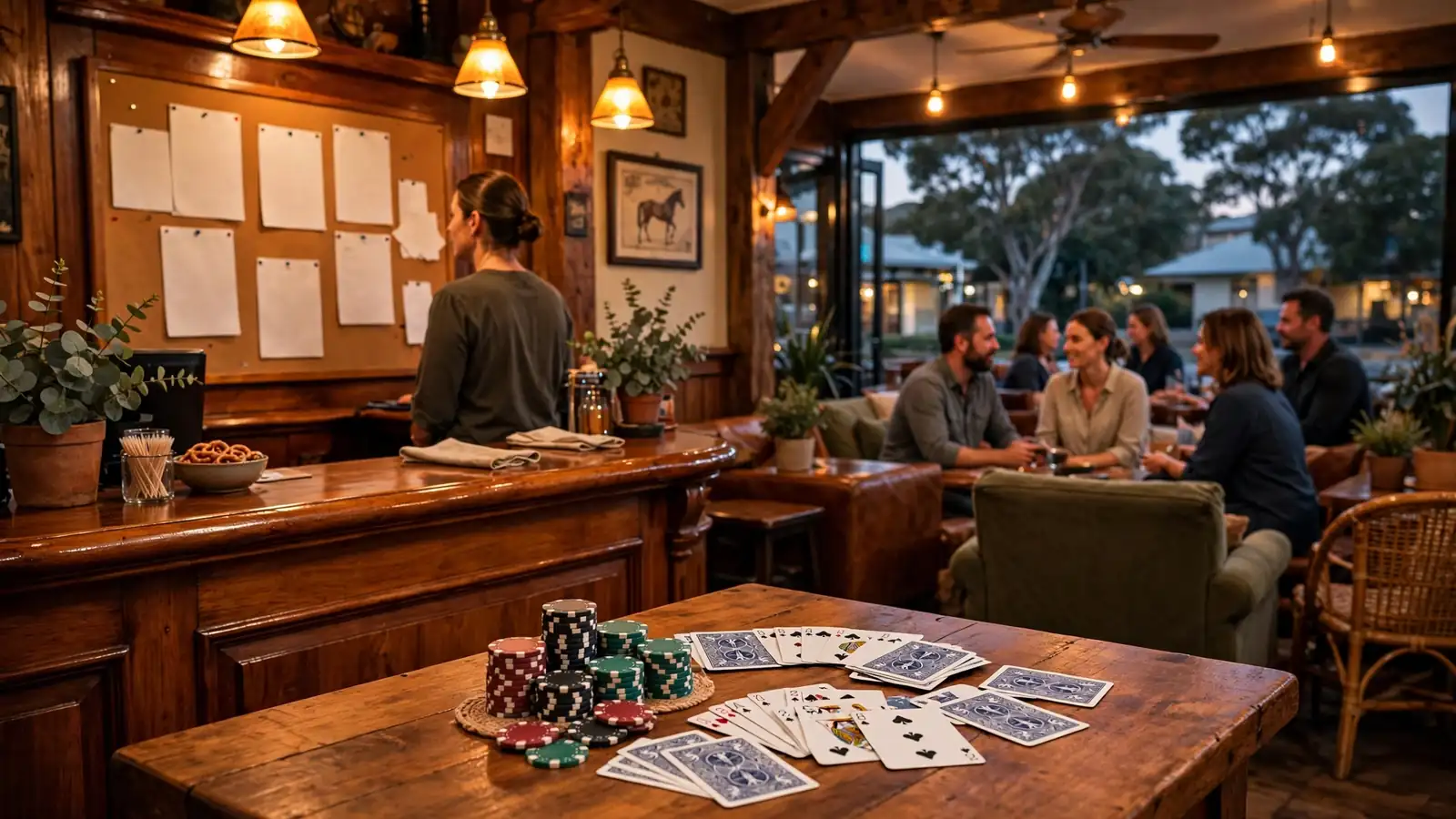
That distinction matters because the Interactive Gambling Act 2001 prohibits operators from providing real-money online casino games to people physically located in Australia. Casino-style online games, including slots, poker and table games, fall within the prohibited services. A promotion may avoid explaining that legal context altogether. Its cheerful wording does not change it.
Look at what the claim actually establishes. It may tell you that a service is advertising an inducement, or that a page is designed to attract attention. It does not, by itself, show who operates the service, whether the terms are genuine, or whether the offer is lawful for an Australian audience. I would not infer those things from a bright button or a “claim now” message.
Be especially careful not to treat access as approval. A website may load, accept account traffic or appear at a different web address, but none of that proves it is an Australian-licensed online casino. A changed address is still just an address. Promotional language can travel with it.
There is also a practical difference between a claim about a venue and a promotion for an online service. A real-world venue can be checked as a place, with an address and entry arrangements. A free-chip or free-spin message may instead lead to a remote gambling service. The shared word “casino” does not make those two things equivalent.
Promotional Claims
Do not mistake a welcome offer or a “free” label for proof of a lawful Australian service.
If you encounter such wording, keep your conclusion modest: you have seen an advertisement, not proof of a lawful Australian offer. Don’t let “free” do the thinking for you. That is the whole trick.
How to Read a Pokies Parlour Review
A review can use “pokies parlour” to mean a physical gaming venue, or use the same words for an online service. Those are not interchangeable. Before weighing an opinion about atmosphere, machines or service, I first check what the review is actually describing.
Look for a clear, identifiable venue: does the writer give its name and explain that the review concerns a place you can visit? Or does the page lead instead to an account sign-up, an app or a website? A headline alone settles nothing. Some pages use familiar venue language while discussing online play, so follow the details rather than the label.
Separate first-hand detail from sales language
A useful review makes its subject concrete. It explains what the reviewer saw or experienced and keeps those observations separate from broad claims such as “the best parlour” or “trusted casino”. Those phrases are judgements, not evidence. I give more weight to details that relate clearly to the place being reviewed than to polished praise that could fit any venue.
Then look at the page’s purpose. Is it describing a visit, or steering you towards a service? Repeated account prompts, promotional banners and links can tell you the page has a commercial angle. That does not automatically make every observation false, but it does give you a reason to distinguish reporting from persuasion. A review is not independent just because it is called one.
Check what the review establishes
For a physical casino, the relevant context is local: Australia’s casino industry is regulated by state and territory, and each property operates under a licence issued by its own jurisdiction. A careful review should make clear which physical property it means. Its description of a venue is not, by itself, proof of every claim about that venue or its licence.
For an online service, be more cautious about what the page implies. A website loading, taking account traffic or appearing at another web address does not establish that it is an Australian-licensed online casino. Nor does a positive review turn an online service into a locally licensed venue. The distinction matters even when the site borrows language associated with a land-based parlour.
Read dates and wording closely, too. A review may describe an earlier visit or repeat information that has since changed. Phrases such as “I found” or “the page states” are more precise than treating an impression as a permanent feature. If the writer does not say when or how an observation was made, do not fill in the gap yourself.
Finally, ask what you can reasonably take away. A review may help you understand what kind of place or service it discusses and what the reviewer thought of it. It cannot establish more than its evidence supports. Keep the useful detail; leave the certainty behind. Dry, but safer.
- Check the specific venue’s address and opening details
- Use valid photo identification for entry
- Verify if a review describes a physical place or an online site
- Assume a “free” label confirms a service is legal
- Treat a working website as evidence of an Australian licence
- Use a bonus claim as a substitute for venue facts
Australian Casino Locations and Getting Through the Door
Australian casino locations are spread across the country, but the details are local: each property operates under a licence issued by its state or territory. A specialist casino directory counts more than 20 full-scale casinos across the states, though venue lists can change and should be checked before you travel. That gives you a rough sense of the national spread, not a permanent inventory.
The Northern Territory offers a useful example of why the local picture matters. A specialist venue listing counts three casinos across three cities there. In Alice Springs, Lasseters Casino is at 93 Barrett Drive, Alice Springs, NT 0870. That street address is more useful for planning a visit than a broad label such as “casino in the Territory.”
There are also named venues beyond the Territory. Jupiters Gold Coast Casino & Hotel is on Broadbeach Island, on the Gold Coast. Country Club Casino is listed on Country Club Ave, Prospect, in Meander Valley. Those details help distinguish a physical gaming venue from a generic reference to a “pokies parlour”; they do not tell you what facilities are open on the day you arrive.
Before setting out, check the specific venue’s own current information for its address, access arrangements and opening details. Major Australian casinos operate around the clock, but that does not mean every entrance, restaurant or other part of a property follows the same schedule. A large site can have different areas with different access conditions. Check the detail, not just the headline hours.
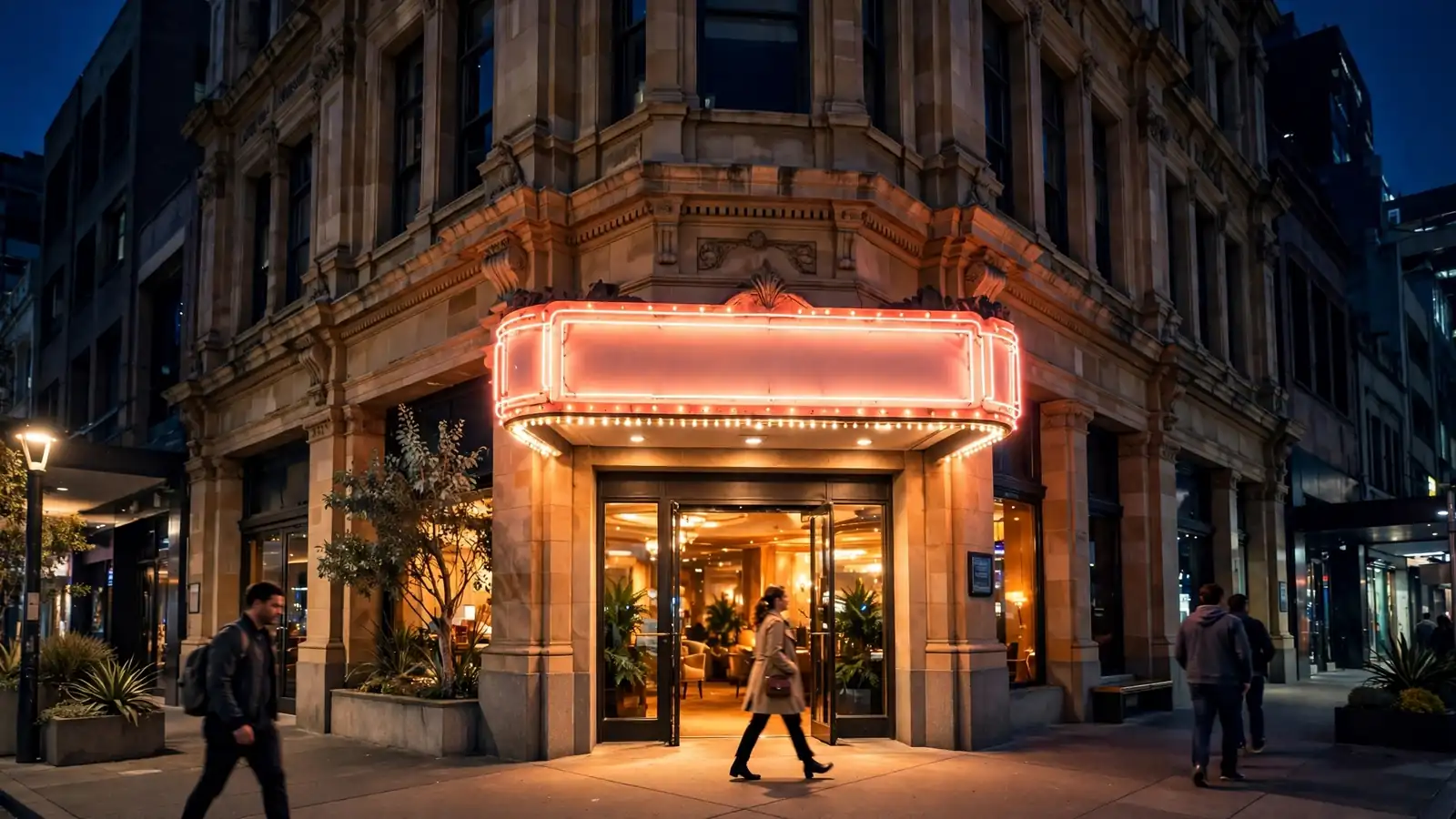
For entry, bring valid photo identification. The minimum age for casino entry is 18 across Australia, and ID checks are part of the practical basics, not a detail to leave until you reach the door. If you are visiting with someone younger, do not assume the casino floor is accessible to them; entry to a wider resort or entertainment complex does not mean entry to the gaming area.
It is worth checking the property’s entry information before travelling, especially if you have not visited that venue before. Dress expectations can also be venue-specific; where a property states a dress standard, follow its wording rather than guessing. Smart casual attire is a familiar local term, but it should not be treated as a universal rule for every room or occasion.
The other small trap is assuming a venue’s name tells you where the public can go. A casino may sit within a hotel or entertainment complex, while access to particular areas is controlled separately. Read the venue’s own entry guidance and confirm the exact location before you leave. Saves a detour.
A “Pokies Parlour Bonus” Is Not the Same as a Venue Detail
A bonus label can sit beside a venue’s name and make the two look like one package. They are different kinds of claims. A venue detail tells you something you can check about a physical place; a bonus statement is promotional wording about an offer. One does not verify the other.
Attention A bonus heading is not proof that an online service is authorised in Australia.
When I’m checking a page, I separate its claims before deciding what they establish. Does it identify a real venue and give details that match the place? Or does it mainly use an appealing bonus phrase, without making clear whether it refers to a physical gaming venue or an online service? That distinction matters more than the polish of the page.
A bonus heading is not proof that a casino has made an offer, that the offer applies at a particular venue, or that an online service is authorised in Australia. Nor does attaching a venue’s name make an online promotion a venue fact. Keep the claim in its lane.
The same goes for a page that loads, accepts account traffic or appears at a different web address. Those things do not establish that the site is an Australian-licensed online casino. A working page is evidence of access, not evidence of approval. Easy mistake.
For a physical venue, look for information that actually describes the place, rather than treating promotional language as a substitute for it. Is the venue clearly identified? Are its details about the venue itself, or do they lead into an online account or offer? If the wording slides between the two without explaining the difference, don’t assume they share the same status.
I’d also read the small print as part of the claim, not as decoration. A headline may be broad while the conditions narrow what it means. That still leaves the basic question: who is making the claim, and what does it establish? If the page gives no clear answer, the bonus phrase cannot supply one.
A “pokies parlour bonus” may sound like a detail of a local gaming venue, but the wording alone tells you neither where the offer applies nor whether it is connected to a physical place. Treat it as a claim to assess, not a fact about the venue. Keep those categories separate, and you are less likely to mistake promotion for proof.
VIP Parlour Access: What You Can Verify
A “VIP” label can sound like a clear promise of special access, but on its own it tells you very little. It does not establish whether a venue is members-only, whether entry is open to visitors, or what facilities are available. Those details need to come from the venue’s own current information, not from the label.
I’d treat VIP as a description to check, not a category with one fixed meaning. It might refer to a separate area, a membership arrangement or simply promotional wording. Without specific terms, you cannot tell which. Nor should you assume that a VIP area has different entry rules from the rest of the venue.
The practical points are more concrete: who can enter, what identification is required, whether membership or an invitation is involved, and which parts of the venue the information actually covers. A page describing a VIP room does not necessarily explain access to the wider property, and a general venue listing may not mention the room at all.
VIP Access Rules
Casino entry in Australia is restricted to adults aged 18 and over, regardless of any VIP or special access labels.
Age is not made optional by a VIP label. Casino entry in Australia is restricted to adults aged 18 and over. If a venue describes a VIP experience, that wording does not override the entry requirement.
Check that the details are about the specific physical venue you mean, and that they come from a source able to speak for it. If the description leaves access conditions unstated, don’t fill in the gaps yourself. “VIP” is not an entry pass.
Parlour Pokies and the Scale of Casino Gaming Machines
“Parlour pokies” can sound like a separate kind of venue or a special category of machine. In this context, it is better read as informal wording for casino gaming machines. The useful distinction is not in the label; it is whether a figure refers to machines installed in casinos or to a broader group of gaming venues.
The recorded total for machines endorsed on venue licences and installed in Australian casinos is 3,308. That gives you a national measure of casino-machine scale, not a count of parlours, casinos, or individual locations. It also does not tell you how machines are distributed between properties. One national figure cannot answer that.
I would treat the number as a snapshot of the licensed-and-installed total, rather than as a description of what you will find at any particular venue. A venue’s own details are needed for that. The figure also says nothing about machines outside casinos, so it should not be stretched into a total for every gaming venue in the country.
That is where the wording can mislead. A page using “parlour” may be describing a physical gaming area, using a loose label, or referring to something else entirely. The term on its own does not establish the venue type or the scope of a count. Read what the number actually measures: here, it is the casino total, based on licence endorsements and installation.
So if you see “parlour pokies” used as though it names a distinct national category, keep the scale in view. Australia’s casino figure is 3,308 machines; it is a bounded count, not a guide to every place that uses the word “parlour.” No more than that.
Real-Money Searches: Don’t Mistake Access for Approval
A site may load on your phone, let you create an account or accept account traffic. None of that shows it is an Australian-licensed casino. An alternate web address proves no more: it is simply another way of reaching a site, not evidence of local approval.
That distinction matters when real money is involved. Under the Interactive Gambling Act 2001, operators cannot provide real-money online casino games to people physically in Australia. Casino-style games offered online, including slots, poker and table games, fall within the prohibited services. A polished page or a smooth sign-in does not change that position.
I would not use access as a shortcut for judging legality. A website can be reachable without being authorised to provide the service it advertises here. And if one address stops working while another appears, that change does not establish that the service has gained approval. It tells you about access to a domain, not the operator’s status.
The wording around “real-money” can make a site sound like a straightforward extension of a physical gaming venue. It is not. A local casino licence applies to a venue under its jurisdiction; it does not turn an online service into an Australian-licensed casino. The two settings should not be blurred just because the branding looks familiar.
So keep the inference narrow: access means you can reach a website at that moment. It does not mean the site is approved to provide real-money online casino games in Australia. That is the point worth holding onto before treating a working page, account screen or replacement address as proof of anything more.
A reachable site is not a licence.
Prepared by the Caspero Casino editorial staff.